Supply Chain
Seven of the fourteen stages depend on three or fewer firms, or on one firm with more than half the market.
Extreme, three or fewer firms, or one with more than halfHigh, four to six firms
Download all chapters as a PDFDownload a short summary
This edition covers each of the fourteen stages of making an AI chip in detail, one chapter per stage, in the order a chip is made, from design software to the data center. Two more chapters at the end look across all the stages, at what a chip costs and who controls the chain. To help readers learn, each chapter has a 3D model, most have an animation, and every one ends with flashcards.
Contents
The fourteen stages of the chain
ExtremeHigh
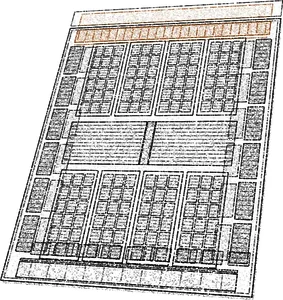 01Chip Design, EDA and IP
Synopsys, Cadence and Siemens EDA make the software used to design every advanced chip. In 2025 they took over 85 percent of its $18 billion market, licensed blocks included.
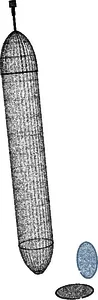 02Silicon and Wafers
Firms based in Japan, Taiwan, Germany and South Korea make most 300 mm wafers used for advanced chips. China makes most polysilicon, almost all of it for solar cells.
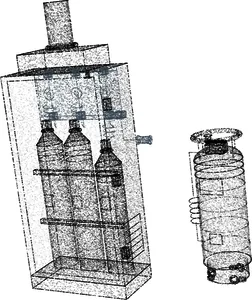 03Chemicals, Gases and Photoresist
Japanese companies held 78 percent of world photoresist sales in 2023. Supply of chip chemicals, gases and metals has been disrupted three times since 2019.
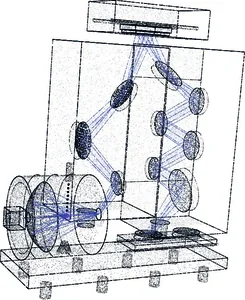 04Lithography
ASML, a Dutch firm, is the only maker of extreme ultraviolet scanners, the machines that print the finest layers of a chip. It sold 48 of them in 2025.
 05Photomasks and Pellicles
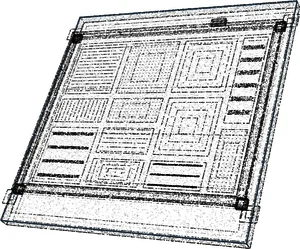
Only three firms in the world make the blank plates for the masks used to print the finest layers of leading-edge chips. Japan’s AGC and Hoya are two of them.
 06Deposition and Etch
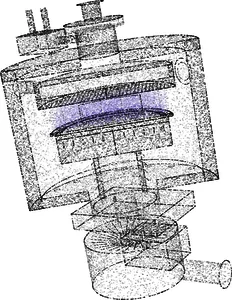
Deposition and etch tools build a chip layer by layer. China-based toolmakers’ share of deposition tools rose from 2 to 7 percent between 2019 and 2024, by CSET’s count.
 07Metrology and Inspection
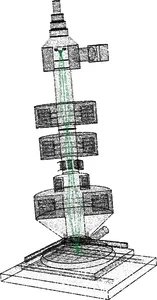
KLA, an American firm, held 56.8 percent of the market for tools that measure and inspect wafers in 2025, by CSET’s count.
 08Foundries and Fabs
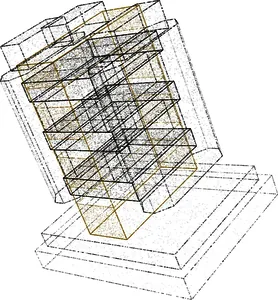
The newest chips need the know-how to build the newest transistors and a fab that costs tens of billions of dollars. Only TSMC, Intel and Samsung have both.
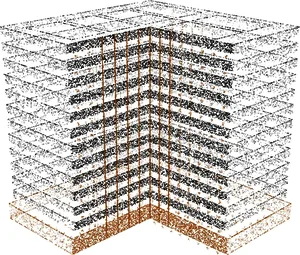 09Memory and HBM
SK hynix, Samsung and Micron make nearly all high bandwidth memory (HBM), the stacked memory beside AI chips. SK hynix took 63.2 percent of HBM revenue in 2025.
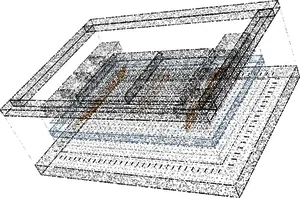 10Advanced Packaging
Epoch AI estimates that in 2025 Nvidia, Google, AMD and Amazon used around 90 percent of the capacity for CoWoS, TSMC’s packaging for AI chips.
 11Substrates and PCBs
Ajinomoto, a Japanese food company, told investors in June 2026 that its build-up film, the insulation inside high-end chip packages, has held over 95 percent of its market since its launch.
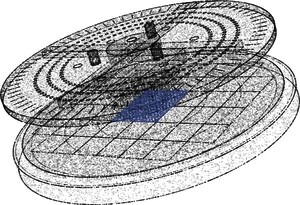 12Test and Assembly
Testing finds bad chips before they go into an expensive package. Japan’s Advantest took about 65 percent of 2025 spending on chip testers, by its own estimate.
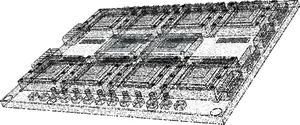 13Systems and Networking
Nvidia’s and AMD’s racks wire 72 AI chips together to run as one computer. Many firms can assemble the racks, but lasers for the optical links were scarce in 2026.
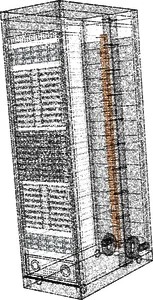 14Data Centers and Power
SemiAnalysis forecast in October 2026 that 50 GW of data center capacity would be added in 2027, about as much as the world had built through 2024. The large transformers that connect such sites to the grid commonly took three years to arrive in 2024.
Across the chain
Across the chain
These two chapters are not stages. They look across all fourteen, at what a chip costs and at the contest over who controls each stage.
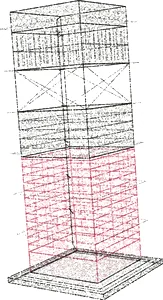 15The Economics of AI Chips
Epoch AI estimated in December 2025 that Nvidia’s B200 AI chip cost about $6,400 to build, mostly for memory and packaging. Its processor silicon cost about $900.
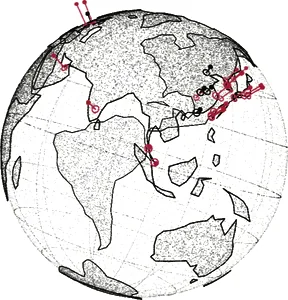 16Who Controls the Chain
Since 2018 the United States has used export controls to limit China’s access to advanced chips and chipmaking tools, and China has been learning to make both.